
The Complete Guide to Home Heating Systems
Which One is Right for You?
Upfront Pricing • Fast Repairs • 24/7 Emergency Service
Understand Your Heating System
Choosing the right heating system for your home is one of the most important decisions you’ll make as a homeowner. The right system can save you thousands of dollars over its lifetime, keep your family comfortable during harsh New England winters, and provide reliable warmth when you need it most.
With over 25 years of experience serving the Boston area, Service Right, LLC has installed, repaired, and maintained every type of heating system available. We’ve seen firsthand how the right heating system can transform a home’s comfort and efficiency—and how the wrong choice can lead to frustration and unnecessary costs.
In this comprehensive guide, you’ll learn about:
- The six main types of heating systems available for your home
- How each system works and what makes it unique
- The pros and cons of each heating option
- Which homes are best suited for each system type
- Cost comparisons and energy efficiency ratings
- Maintenance requirements to keep your system running smoothly
Whether you’re building a new home, replacing an aging system, or simply trying to understand what you already have, this guide will help you make an informed decision about your home’s heating needs.
Expert insights from Service Right, LLC – Your trusted Boston HVAC contractor with over 25 years of experience.
Take the 2-Minute Quiz!
Which Heating System is Right for Your Home?
Answer a few quick questions to get a personalized recommendation
✓ Your Recommended System:
Service Right, LLC

Efficient expert advise and service. He really knows his business. Gave accurate diagnosis of AC problem and fixed it quickly. Other hvac guy gave exaggerated opinion of problem and was wrong also. Service Rught provided Honest and efficient service I would recommend them to anyone.
-Annette S.
Steam Boiler Systems
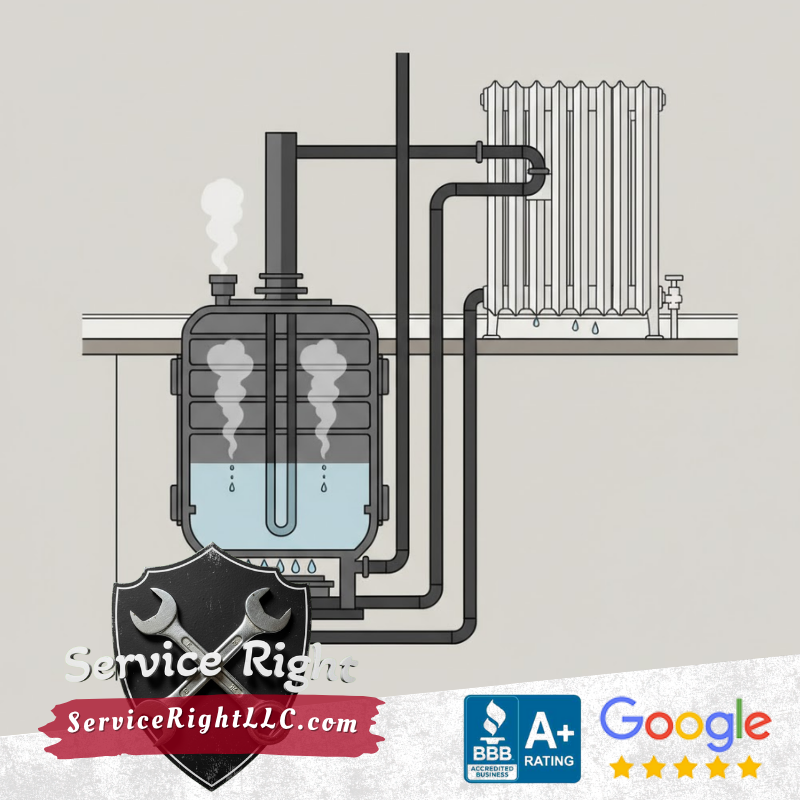
Steam boiler systems are the workhorses of older homes, particularly those built before 1950. These systems work by heating water in a boiler until it turns to steam. The steam then travels through a network of pipes to radiators throughout your home, where it releases its heat and condenses back into water. The condensed water returns to the boiler through gravity, and the cycle repeats.
Common in older homes throughout the Northeast, steam boilers were once the standard for residential heating. While they’re less common in new construction today, thousands of steam systems continue to provide reliable heat in historic Boston-area homes.
Steam Boiler Pros
- Excellent heat distribution: Steam carries more heat energy than hot water, providing powerful heating capacity
- No pumps needed: Steam rises naturally, so there are no circulating pumps to maintain or replace
- Long lifespan: With proper maintenance, steam boilers can last 30+ years
- Quick heat-up: Steam systems can reach high temperatures quickly when you need heat fast
Steam Boiler Cons
- Less energy-efficient: Older systems typically operate at 60-80% efficiency compared to modern alternatives
- Can be noisy: The infamous “banging pipes” sound comes from steam systems with maintenance issues
- Requires more maintenance: Steam traps, valves, and vents need regular attention
- Slower temperature adjustment: These systems are slower to respond to thermostat changes
Best For:
- Historic homes with existing steam radiators and infrastructure
- Large, multi-story buildings where steam distribution is advantageous
- Properties where maintaining original systems is preferred or required
- Homeowners who appreciate the classic radiator aesthetic
Forced Hot Water Systems
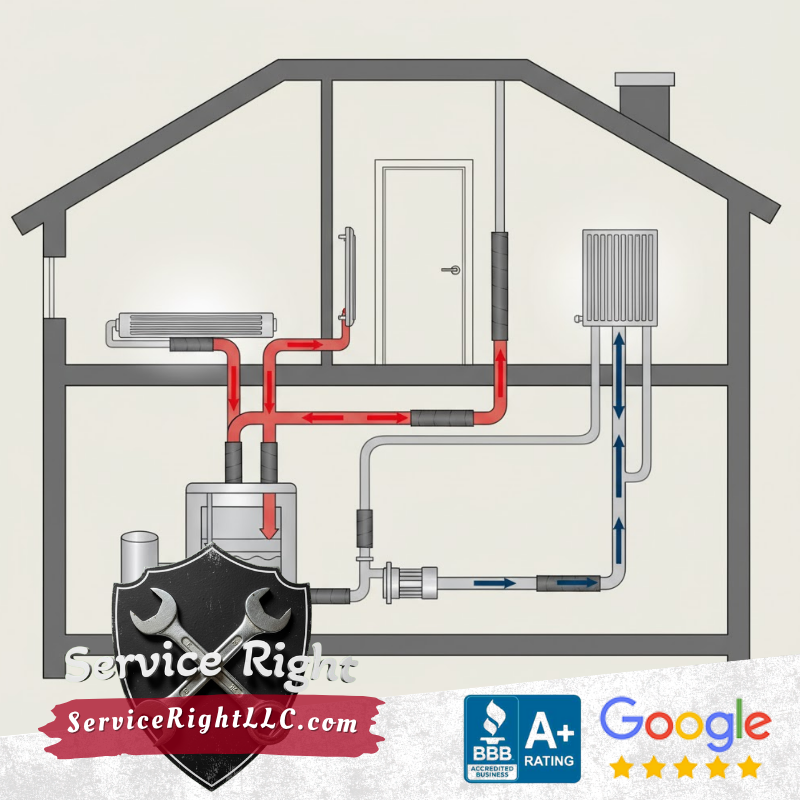
Forced hot water systems, also called hydronic systems, heat water in a boiler (typically cast iron, fired by oil or natural gas) and circulate it through a network of pipes using electric pumps. The hot water flows to radiators, baseboard heaters, or radiant floor heating loops throughout your home, where it releases heat before returning to the boiler to be reheated.
This is one of the most popular heating systems in the Northeast and is the modern evolution of steam heating technology.
Forced Hot Water Pros
- More efficient than steam: Modern systems achieve 85-95% efficiency ratings
- Quiet operation: No banging pipes or loud startup noises
- Even, comfortable heat: Provides consistent warmth without hot and cold spots
- Zoning capability: Different areas can be heated to different temperatures
Forced Hot Water Cons
- Higher installation cost: More expensive to install than forced air systems
- Freezing risk: If power goes out in winter, pipes can freeze
- Potential for leaks: Water systems can develop leaks over time
- Slower response time: Takes longer to heat up than forced air systems
Best For:
- Homes wanting efficient, even heating throughout
- Properties with multiple heating zones for customized comfort
- Homeowners seeking quiet operation
- Those considering radiant floor heating additions
- Renovations where ductwork installation isn’t feasible
Combination Boilers
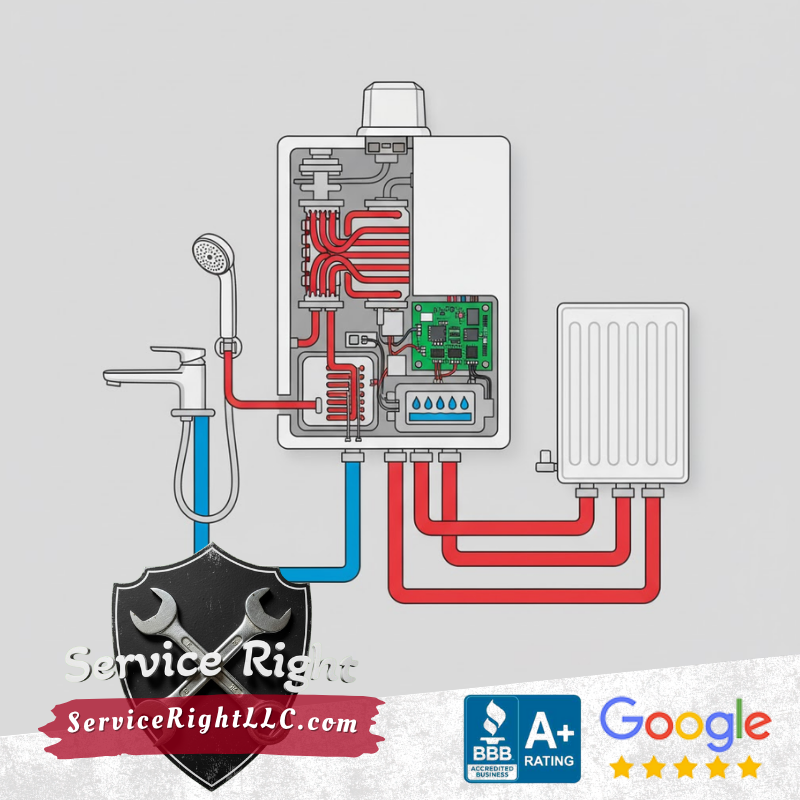
Combination boilers are innovative systems that provide both space heating and on-demand hot water from a single, compact unit. When you turn on a hot water tap, the combi boiler instantly heats water as it flows through the unit. For home heating, it functions like a traditional hot water boiler, circulating heated water through your radiators or baseboard heaters. This eliminates the need for a separate water heater tank.
Popular in Europe for decades, combi boilers are becoming increasingly common in the United States as homeowners discover their efficiency and space-saving benefits.
Combi Boiler Pros
- Space-saving design: No separate water heater tank needed, freeing up valuable space
- High energy efficiency: Modern units achieve 90-98% efficiency ratings
- Unlimited hot water: Never run out of hot water with on-demand heating
- Lower utility bills: Only heats water when you need it
- Faster hot water delivery: No waiting for a tank to heat up
Combi Boiler Cons
- Simultaneous demand issues: May struggle with multiple showers running while heating the home
- Higher upfront cost: More expensive than traditional systems initially
- Not ideal for large homes: May not meet hot water demands of 4+ bathroom homes
- Gas supply requirements: Requires adequate gas line capacity
Best For:
- Small to medium-sized homes (1-3 bathrooms)
- Properties with limited mechanical room space
- Homeowners wanting to eliminate bulky water heater tanks
- Energy-conscious households looking to reduce utility costs
- Condos and apartments where space is at a premium
Heat Pumps
Forced hot air systems use a gas or oil-fired furnace to heat air, which is then distributed throughout your home via a network of metal ducts and registers. A blower fan pushes the heated air through supply ducts to each room, while return ducts pull cooler air back to the furnace to be reheated. This is the most common heating system in modern American homes.
The same ductwork can be used for central air conditioning in summer, making this a versatile year-round comfort solution.
Heat Pump Pros
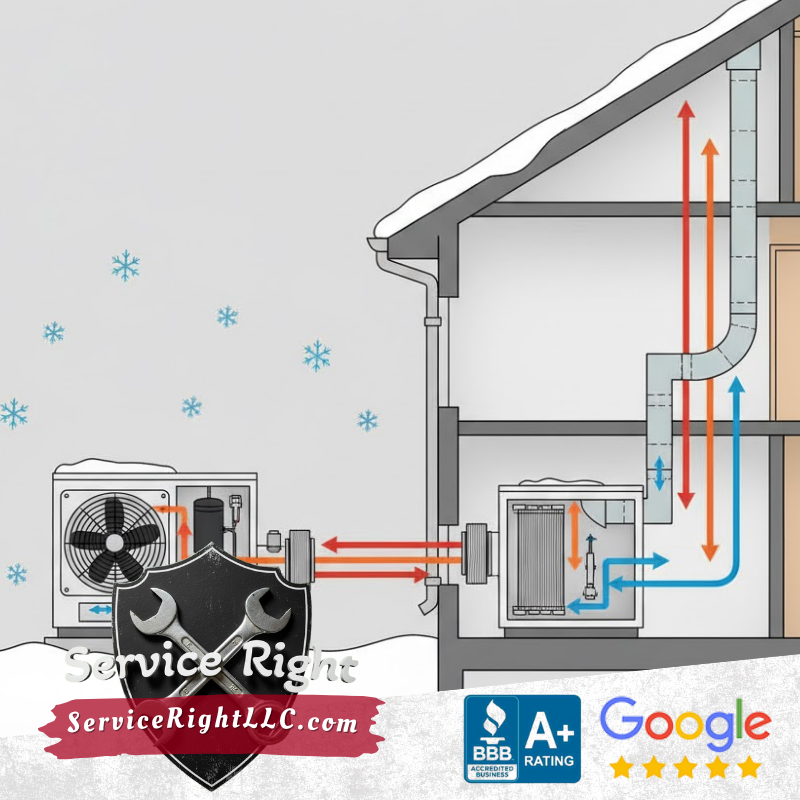
- Extremely energy-efficient: Can achieve 300-400% efficiency (move more energy than they consume)
- Environmentally friendly: No combustion means no direct carbon emissions
- Dual heating and cooling: One system handles both seasons
- Lower operating costs: Particularly in moderate climates
- Qualifies for incentives: Federal tax credits and state rebates often available
Heat Pump Cons
- Less effective in extreme cold: Efficiency drops significantly below 25°F
- Higher upfront cost: More expensive to install than traditional furnaces
- May need backup heating: Boston winters often require supplemental heat
- Requires electricity: Vulnerable during power outages
Best For:
- Moderate climates or as part of a dual-fuel system in cold climates
- Energy-conscious homeowners focused on reducing carbon footprint
- New construction or major renovations
- Those wanting year-round comfort in one efficient system
- Homes without natural gas access
- Properties where taking advantage of tax incentives and rebates makes sense
Forced Air Systems
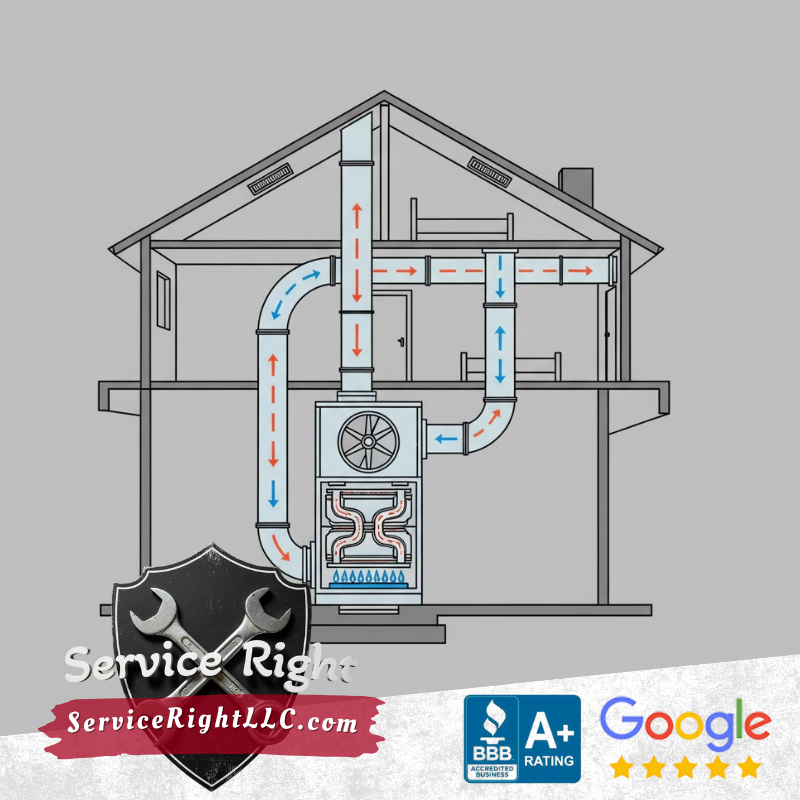
Forced hot air systems use a gas or oil-fired furnace to heat air, which is then distributed throughout your home via a network of metal ducts and registers. A blower fan pushes the heated air through supply ducts to each room, while return ducts pull cooler air back to the furnace to be reheated. This is the most common heating system in modern American homes.
The same ductwork can be used for central air conditioning in summer, making this a versatile year-round comfort solution.
Forced Air Pros
- Quick heat-up time: Rooms warm up faster than with radiant systems
- Lower installation cost: Generally less expensive than boiler systems
- AC integration: Can easily add central air conditioning using the same ducts
- Air filtration: Easy to add air purifiers, humidifiers, and advanced filters
- Good for allergies: Proper filters can remove allergens and improve air quality
Forced Air Cons
- Distributes dust and allergens: Can circulate particles if filters aren’t maintained
- Noisier operation: Blower fans and rushing air create more noise than radiant heat
- Uneven heating: Can create hot and cold spots throughout the home
- Ductwork can leak: Leaky ducts waste energy and reduce efficiency
- Dries out air: Can make indoor air uncomfortably dry in winter
Best For:
- New construction where ductwork can be planned from the start
- Homes that also need central air conditioning
- Properties with existing ductwork already installed
- Those prioritizing quick temperature changes
- Homeowners wanting whole-home air filtration systems
Comparing Costs: Installation and Operating Expenses
Average Boston-Area Home Installation Costs
Understanding both the upfront installation costs and long-term operating expenses is crucial when choosing a heating system. While a cheaper installation might seem attractive, higher operating costs can quickly eliminate any initial savings. Conversely, investing more upfront in an efficient system can pay dividends for years to come.
| Heating System | Installation Cost | Annual Operating Cost | Efficiency Rating | Lifespan |
|---|---|---|---|---|
| Steam Boiler | $6,000 - $12,000+ | $2,400 - $3,500/year | 60-80% AFUE | 15-30 years |
| Forced Hot Water | $6,500 - $13,000+ | $1,300 - $2,000/year (gas) $2,400 - $3,500/year (oil) |
85-95% AFUE | 15-30 years |
| Combination Boiler | $4,500 - $9,000 | $1,200 - $1,900/year | 90-98% AFUE | 15-20 years |
| Furnace (Gas) | $4,000 - $8,000 + $3,000-$10,000 for ductwork if needed |
$1,200 - $1,800/year | 80-98% AFUE | 15-20 years |
| Furnace (Oil) | $4,500 - $8,500 + $3,000-$10,000 for ductwork if needed |
$2,200 - $3,200/year | 80-90% AFUE | 15-20 years |
| Heat Pump (Air-Source) | $5,000 - $12,000 | $1,400 - $2,200/year + backup heat costs |
8-13 HSPF (300-400% efficient) |
10-15 years |
| Heat Pump (Ground-Source) | $15,000 - $25,000+ | $1,000 - $1,600/year | 15-25 HSPF (400-500% efficient) |
20-25 years |
| Note: Costs are estimates for average Boston-area homes. Actual costs vary based on home size, existing infrastructure, and equipment chosen. Annual operating costs based on current fuel prices and may fluctuate. | ||||
Installation Costs (Typical Range for Aveareg Boston-Area Home):
- Steam Boiler: $6,000 – $12,000+ (depends on boiler size and existing system condition)
- Forced Hot Water: $6,500 – $13,000+ (new piping and radiators add costs)
- Combination Boiler: $4,500 – $9,000 (less infrastructure needed, but unit costs more)
- Furnace & Ductwork: $4,000 – $8,000 (ductwork adds $3,000-$10,000 if not existing)
- Heat Pump: $5,000 – $20,000+ (air-source on lower end, ground-source significantly higher)
Note: These are general estimates. Your actual costs will vary based on home size, system size, existing infrastructure, and specific equipment chosen. Service Right, LLC provides clear, upfront pricing for all installations.
Operating Costs (Annual – Based on Average Boston Home):
Operating costs depend heavily on fuel prices, which fluctuate over time. Here’s how the systems compare based on current fuel costs and typical efficiency ratings:
- Natural Gas Furnace (95% AFUE): $1,200 – $1,800/year
- Natural Gas Boiler (90% AFUE): $1,300 – $2,000/year
- Oil Furnace (85% AFUE): $2,200 – $3,200/year
- Oil Boiler (85% AFUE): $2,400 – $3,500/year
- Heat Pump (HSPF 10): $1,400 – $2,200/year (electricity rates vary)
- Heat Pump with backup: $1,600 – $2,500/year
Understanding Efficiency Ratings:
AFUE (Annual Fuel Utilization Efficiency) applies to furnaces and boilers. A 95% AFUE rating means 95% of the fuel becomes heat for your home, with only 5% lost through the chimney or exhaust.
HSPF (Heating Seasonal Performance Factor) applies to heat pumps. Higher numbers indicate better efficiency. Modern heat pumps typically range from 8-13 HSPF.
Long-Term Cost Considerations:
- Fuel price volatility: Oil and gas prices fluctuate. Electricity prices are more stable but vary by region.
- Maintenance costs: Budget $150-$400 annually for professional maintenance
- Repair costs: Older systems require more frequent repairs as components age
- Rebates and incentives: Federal tax credits and state rebates can offset 20-30% of heat pump installation costs
- Home resale value: Modern, efficient heating systems can increase property value
Locally owned.
Clear and Upfront Pricing.
Fast Repairs.
24/7 Emergency Service.



“Jolly is an amazing problem solver. While other big firms wanted to replace the entire HVAC system which is only 14 years old, Jolly took the time to find the problem and replaced the broken part, saving us thousands of dollars. We could not be happer with his service, skills, attention to detail, and responsiveness.”
-Julianne M.
Frequently Asked Questions
Can I switch from one heating system to another?
Yes, you can switch heating systems, but it depends on your home’s existing infrastructure. For example, switching from a furnace to a boiler system requires adding radiators or baseboard heaters, while switching from a steam boiler to forced hot water may use existing radiators. Service Right, LLC can assess your home and provide upfront pricing for system conversions.
How long does each type of heating system typically last?
Steam and hot water boilers can last 15-30 years with proper maintenance. Furnaces typically last 15-20 years. Heat pumps have a lifespan of 10-15 years. Combination boilers usually last 15-20 years. Regular annual maintenance by professionals like Service Right can help maximize your system’s lifespan.
Which heating system is most efficient?
Heat pumps are generally the most energy-efficient, especially in moderate climates, with efficiency ratings of 300-400%. Combination boilers are also highly efficient (90-98% AFUE). Forced hot water systems typically achieve 85-95% efficiency, while older steam boilers are usually less efficient at 60-80%. Modern condensing furnaces can reach 95%+ efficiency.
Do I need a backup heating system with a heat pump?
In the Boston area, where winter temperatures regularly drop below 25°F, a backup heating source is recommended. Many homeowners use a dual-fuel system with a furnace as backup, or electric resistance heating strips. Service Right can design a system that ensures you stay warm even during the coldest days.
How often should I service my heating system?
All heating systems should be professionally serviced annually, ideally before the heating season begins (late summer or early fall). This includes cleaning, inspection, and testing to ensure safe and efficient operation. Service Right offers maintenance plans and carries common parts on their trucks for fast repairs when needed.