DIY HVAC Maintenance vs. When to Call a Professional
Your HVAC system does more work than any other piece of equipment in your home. It runs thousands of hours a year, moves air through every room, and keeps your family comfortable whether it's 95° in August or 10° in January. And like anything that works that hard, it needs regular attention to keep running right.
The good news is that some of that attention is stuff you can handle on your own—no tools required, no HVAC license needed. But there's a clear line between what a homeowner should do and what requires a trained technician with the right equipment. Knowing where that line is can save you money, prevent breakdowns, and add years to your system's lifespan. Let's break it down.
What You Can (and Should) Handle Yourself
You don't need to be a technician to keep your HVAC system in decent shape between service visits. A few simple habits go a long way—and ignoring them is one of the most common reasons systems break down early.
Change Your Filters—More Often Than You Think
This is the single most impactful thing you can do for your system. A clogged filter forces your blower motor to work harder, reduces airflow, drives up your energy bills, and can eventually cause your evaporator coil to freeze. Most manufacturers recommend swapping filters every 30 to 90 days, but that range depends on your situation. If you live in a dense urban area, have pets, or run your system year-round, lean closer to every 30 days. Suburban homes with fewer airborne contaminants can stretch closer to 90.
Keep Your Outdoor Unit Clear
Your condenser sits outside and takes a beating. Leaves, grass clippings, pine needles, and general yard debris collect around and inside the unit, restricting airflow and reducing efficiency. Walk out and check it every couple of weeks. Pull away anything that's piled up within two feet of the unit, and gently hose off the fins if they look caked with dirt. It takes five minutes, and it makes a noticeable difference in how well your AC performs.
Check Your Vents and Registers
This one sounds obvious, but it's a problem we see constantly: supply or return vents blocked by furniture, rugs, curtains, or boxes. When airflow is restricted, your system has to run longer cycles to hit the thermostat setting. That means higher bills and more wear on the equipment. Do a quick walkthrough of your home and make sure every vent has at least a few inches of clearance on all sides.
Swap Your Thermostat Batteries
If your thermostat runs on batteries, replace them once a year. A dying battery can cause your thermostat to lose its programming, display incorrect readings, or shut off entirely—leaving your system idle when you need it most. While you're at it, double-check that your heating and cooling schedules still make sense for your routine. A properly programmed thermostat keeps your system from working overtime.
Due for a Professional Tune-Up?
We'll check what you can't. Upfront pricing, no surprises. Available 24/7.
Where DIY Stops and a Pro Starts
The tasks above are homeowner territory. Everything below requires specialized tools, technical knowledge, and in some cases, legal certification. This is where a qualified AC repair technician earns their keep.
Refrigerant Pressure Checks
Your air conditioner relies on a precise charge of refrigerant to transfer heat. Too little, and the compressor works overtime and eventually burns out—a repair that can cost more than a new unit. Too much, and you'll damage internal components and reduce efficiency. Checking refrigerant levels requires professional gauges and EPA Section 608 certification. This isn't something you can eyeball, and it's not something you should attempt.
Electrical Component Testing
Capacitors, contactors, fan motors, and compressor windings all degrade over time. A technician uses a multimeter to measure voltage, amperage, and microfarad readings on these components to catch failures before they happen. A weak capacitor, for example, might still let your system run today—but it's putting extra strain on the motor every cycle. Catching it during a maintenance visit prevents a no-cool emergency on the hottest day of the year.
Condensate Drain Line Clearing
Your AC pulls moisture out of the air as it cools. That moisture drains through a condensate line, and over time, algae, mold, and sludge build up inside it. When the line clogs, water backs up—and it has to go somewhere. Usually that means water damage to your ceiling, walls, or flooring. A technician vacuums out the line and treats it to prevent buildup. It's a five-minute job during a service call that can save you thousands in water damage repairs.
Deep Coil Cleaning
Both your evaporator coil (inside) and condenser coil (outside) need periodic deep cleaning. Dirty coils dramatically reduce heat transfer, which means your system runs longer, works harder, and costs more to operate. A professional HVAC service uses chemical cleaners and specialized tools to restore coils to factory efficiency—something a garden hose and a brush can't accomplish.
Motor and Bearing Lubrication
Older systems have motors with oil ports that need periodic lubrication. Without it, bearings wear down, friction increases, and you start hearing grinding or squealing noises—sounds that mean expensive damage is already happening. During a professional tune-up, your technician oils these components and checks for early signs of wear, keeping things quiet and running smoothly.
The Real Cost of Skipping Professional Maintenance
DIY maintenance is important, but it's not a substitute for professional service. Think of it this way: changing your car's oil is great, but it doesn't replace a full inspection by a mechanic. The same logic applies to your HVAC system.
Systems that don't get annual professional maintenance tend to lose 5% of their efficiency every year. On a system that costs $150 a month to run, that's an extra $90 the first year, $180 the second, and so on. Within five years, you're paying significantly more for the same comfort—or less comfort for the same money.
Then there's the lifespan factor. A well-maintained furnace or AC unit can last 15 to 20 years. A neglected one? You might be shopping for a furnace replacement at year 10. When a new system runs $5,000 to $12,000, the math on annual maintenance speaks for itself.
- Change your air filter every 30–90 days depending on your environment—this alone prevents most common issues.
- Keep at least two feet of clearance around your outdoor condenser unit year-round.
- Refrigerant, electrical testing, and coil cleaning require professional tools and certification—don't attempt these yourself.
- A clogged condensate drain can cause thousands in water damage—have it cleared during annual service.
- Skipping professional maintenance can cut your system's lifespan nearly in half and increase energy bills every year.
How to Know It's Time to Call
Even if you're doing everything right on the DIY side, your system will eventually show signs that it needs professional attention. Here's what to watch for:
- Unusual noises: Grinding, banging, squealing, or clicking sounds that weren't there before usually point to a mechanical issue—a failing motor, a loose component, or a refrigerant problem.
- Weak or warm airflow: If air is coming out of your vents but it's not cold (or not hot), something internal has shifted. Could be a refrigerant leak, a failing compressor, or a blower issue.
- Frequent cycling: Your system turning on and off more often than usual is called short cycling, and it's a sign of an electrical problem, an oversized system, or a failing component.
- Rising energy bills: If your usage habits haven't changed but your bills are climbing, your system is working harder than it should. That's a maintenance issue.
- Strange smells: Musty odors often mean mold in the ductwork or on the coil. A burning smell could indicate an electrical issue. Either way, don't ignore it.
If any of these sound familiar, it's worth getting a professional set of eyes on it before a small problem becomes an expensive one. Our team at Service Right carries the most common parts on our trucks, so most heating repairs and AC fixes get done in a single visit—no waiting on parts, no second trip.
See the Difference
Drag the slider to compare before and after a recent HVAC service call.
Recent HVAC Service Work
Real maintenance and installation jobs from homes across the Boston area.
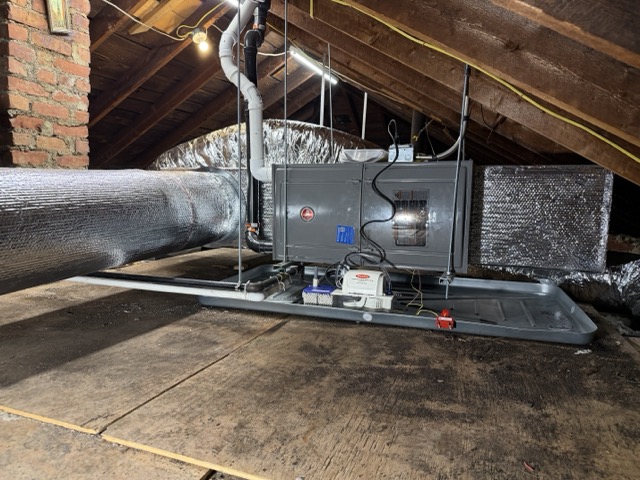
 New system installation – Boston, MA
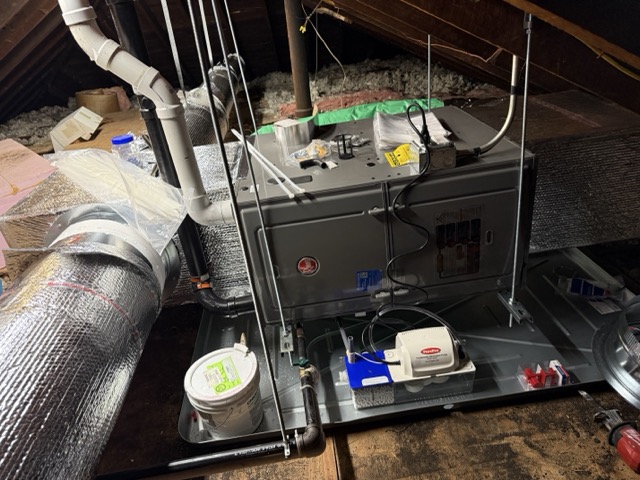
Professional HVAC service – Brookline, MA
New system installation – Boston, MA
Professional HVAC service – Brookline, MA
Frequently Asked Questions
The biggest things are changing your filter regularly (every 30–90 days), clearing debris away from your outdoor condenser unit, and making sure your supply and return vents aren't blocked by furniture, rugs, or curtains. These simple habits prevent most common airflow and efficiency problems.
Refrigerant handling requires specialized manifold gauges and EPA Section 608 certification. An incorrect charge—too high or too low—can destroy your compressor, void your manufacturer warranty, and in some cases violate federal law. This is one task that absolutely requires a licensed professional.
In denser urban areas, airborne pollutants, dust, and particulates are significantly higher than in suburban settings. If you live in a city, check your filter monthly during peak heating and cooling season. You'll likely need to swap it every 30 days rather than the 90-day interval that works in less polluted areas.
When the condensate line backs up, the water has nowhere to go—so it overflows. Depending on where your air handler is located, that can mean water damage to ceilings, walls, or flooring. Some systems have a safety float switch that shuts the unit down when a clog is detected, but not all do. Annual professional maintenance includes clearing this line to prevent these issues.
Tune-up costs vary depending on the system type and what's included, but a thorough professional maintenance visit typically ranges from $75 to $200. That covers the electrical testing, coil cleaning, refrigerant check, drain clearing, and full system inspection that DIY can't replicate. Considering a single avoided repair can save you $500 to $2,000+, it's one of the best investments you can make in your home.
If you can't remember, it's overdue. Clogged condensate lines are one of the most common—and most preventable—causes of HVAC-related water damage. Our technicians clear and treat the line as part of every maintenance visit, so you don't have to think about it.
Jolly was incredibly professional and responsive. I needed an HVAC technician for a boiler issue on very short notice during the winter, and he was the only one able to come out the same day. He explained the issue and the recommended solution in a way that was easy to understand, and followed up to make sure everything was resolved. I would absolutely work with him again.
Areas We Serve
Ready to Get Your System Professionally Serviced?
Contact Us
Call or fill out our form for a free, no-obligation estimate.
Schedule Service
We'll find a time that works—same-day service often available.
We Handle It All
Full inspection, cleaning, and testing. Upfront pricing, no surprises.